

Why a Thorough Home Inspection Matters: A Hidden Drain Leak in Vienna, VA
Some of the most expensive problems in a home are the ones you can't see. Behind a perfectly painted ceiling or a freshly finished wall, water can be doing damage for months — sometimes years — before anyone notices. A recent job in Vienna, VA is a good example of exactly why a thorough home inspection matters before you settle on a purchase.
What We Found
The homeowner had noticed a small sign of trouble, enough to call us in and take a closer look. Once we opened up the ceiling and wall to investigate, the real scope of the problem became clear.
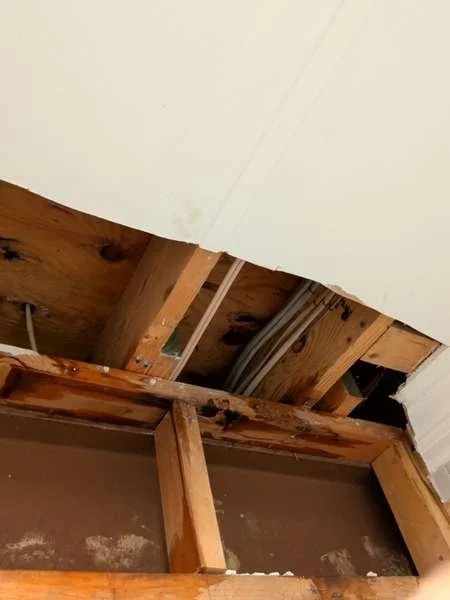
The ceiling opened up to reveal months of hidden water damage.
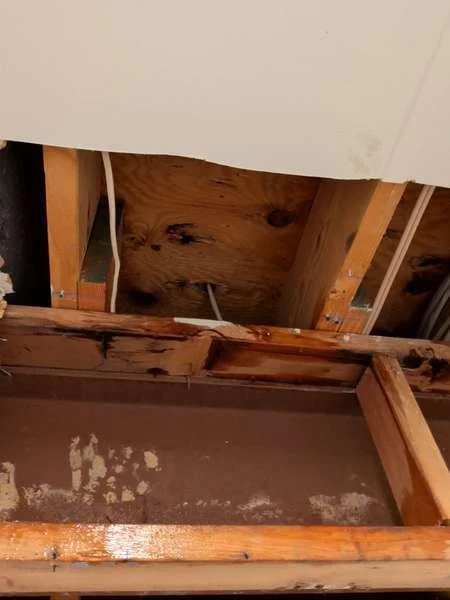
A closer look at the stained framing
The framing above told the story right away — long-term water staining across multiple joists, the telltale sign of a slow, ongoing leak rather than a single incident.
Tracing the Source
Once the ceiling was opened further, we were able to trace the water damage back to its source: a leak in the drain line running through a wall cavity.
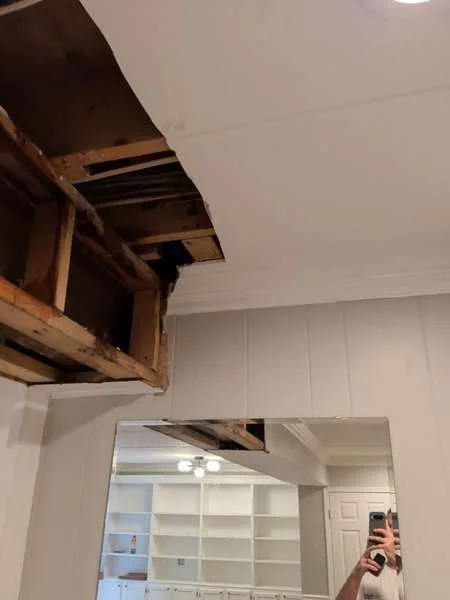
Tracing the leak back to the drain line.
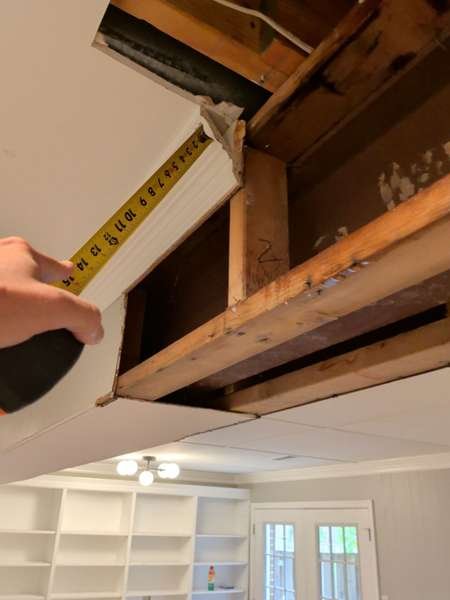
Measuring the full extent of the damaged area.
A drain line leak is a particularly sneaky problem. Unlike a burst supply line, which announces itself immediately with a flood, a drain leak can weep slowly for a long time — soaking into wood framing, insulation, and drywall little by little, often without any obvious sign at the surface.
The Wall Told the Same Story
Opening the wall below confirmed what the ceiling had already shown us. The drywall and baseboard had to come out to expose the full run of plumbing and check for mold growth along the way.
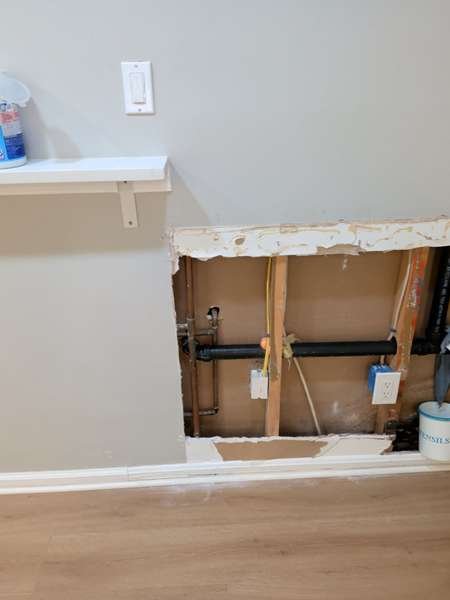
The wall told the same story once opened.
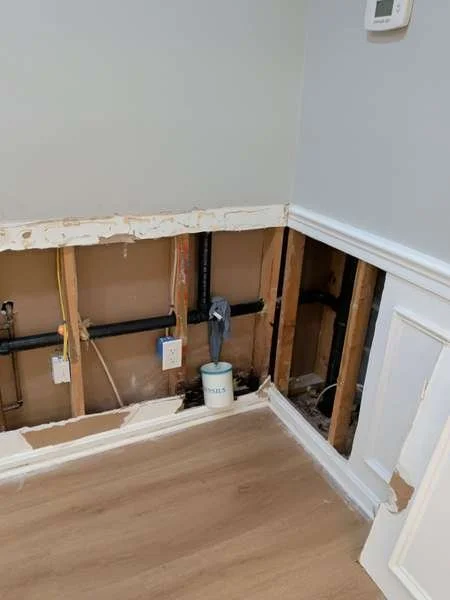
A wider view of the plumbing run behind the wall.
Where moisture sits against wood and drywall for extended periods, mold isn't a possibility — it's an expectation. That's exactly what we found here, which is why the affected materials all need to come out rather than just be patched over.
Why This Matters Before You Buy
This is the kind of damage a routine walkthrough will almost never catch. Ceilings and walls hide plumbing runs by design, and a slow drain leak doesn't always leave a visible stain, especially if it's been recently painted over. A qualified home inspector — and ideally a plumber's camera inspection on older drain lines — is often the only way to catch a problem like this before it becomes the buyer's responsibility.
Left unresolved, a hidden leak like this one keeps causing damage the whole time it goes unnoticed:
Structural wood decay
The longer framing stays wet, the more it weakens, eventually requiring replacement rather than repair.
Mold growth
Once moisture sits against wood and drywall, mold can spread through wall and ceiling cavities, well beyond what's visible at the surface.
Rising repair costs
A leak caught early might mean a small patch. Caught late, it can mean opening up ceilings, walls, and flooring to fully remove and rebuild the damaged area.
Air quality concerns
Mold growth inside wall and ceiling cavities can affect indoor air quality long before it's visible to the people living in the home.
What This Repair Involves
Now that the ceiling and wall are open and the source has been identified, the next steps are to fully remove any affected framing, drywall, and insulation, repair the drain line itself, and rebuild the ceiling and wall to match the home's original condition. Based on the scope of what we've uncovered so far, we expect the total cost to restore this space to its pre-incident condition to land around $5,000-$6,500 — a range that would have been far smaller had the leak been caught at an earlier stage.
The Takeaway for Homeowners and Buyers
If you're buying a home, don't skip a full inspection — and don't hesitate to ask specifically about plumbing, especially drain lines running through ceilings and walls, which are notoriously easy to overlook. If you already own your home, keep an eye out for subtle signs: a faint musty smell, slight discoloration on a ceiling, or a soft spot underfoot. Catching a leak early is almost always the difference between a manageable repair and a much larger one.
We'll be following up as work on this project continues — check back for updates as we finish restoring this space.
If you're dealing with a suspected leak, water damage, or mold issue in your home, [contact us](https://www.contractingbros.com/contact-us) for an assessment.