

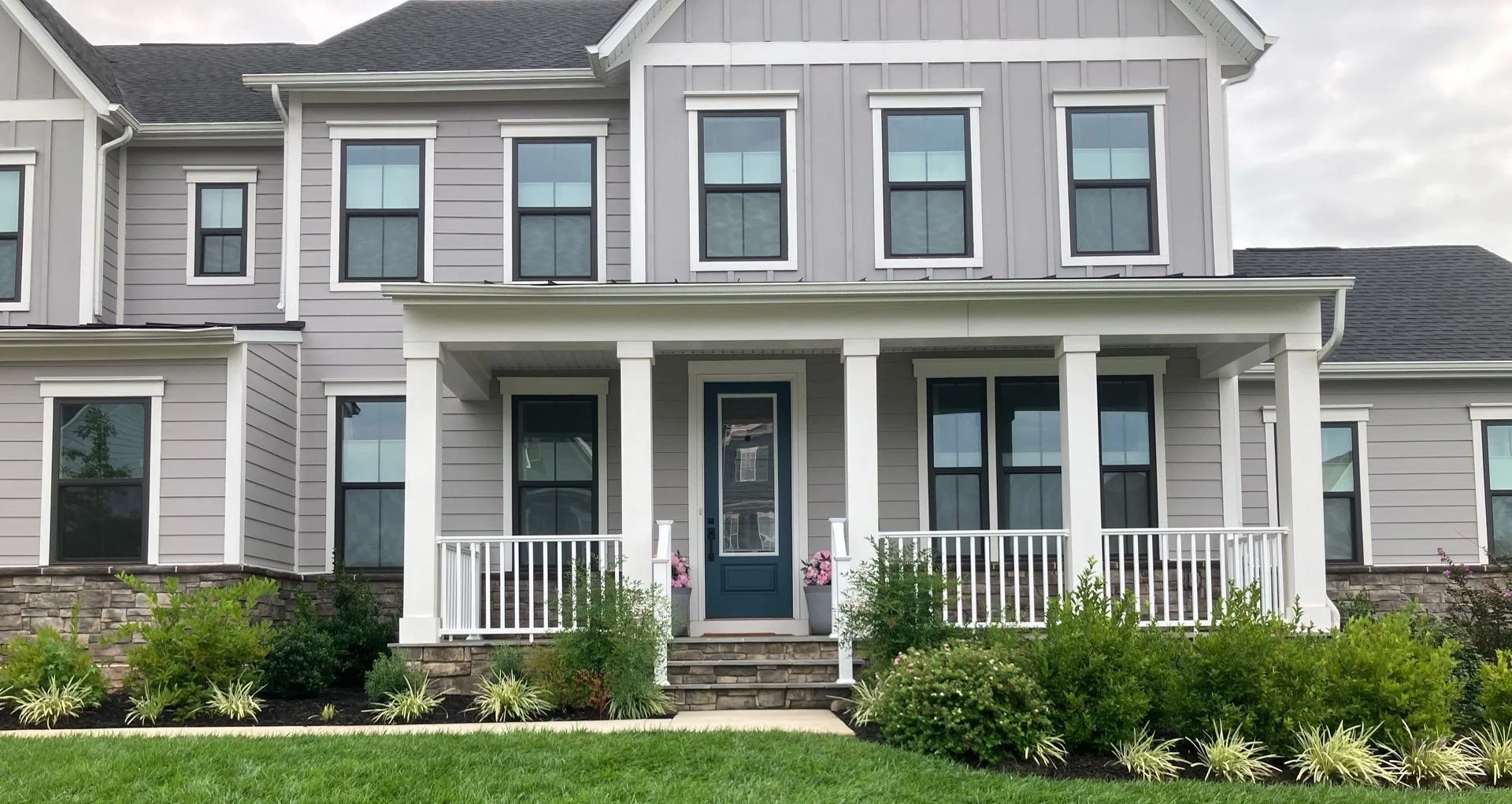
Vinyl Porch Railings in Aldie, VA: A One-Day Upgrade That Adds Safety and Serious Curb Appeal
Some projects take weeks. This one took a day. A front porch in Aldie went from unfinished to framed with vinyl railings anchored into bluestone and concrete — here's how that anchoring actually works, and why vinyl holds up in Northern Virginia weather.
Some projects take weeks. This one took a day — and it changed the entire face of the house.
A homeowner in Aldie reached out about their front porch. The stonework was beautiful: bluestone treads, a stacked stone knee wall, clean white columns, a deep blue front door. But the entry had no railing. Guests coming up the steps had nothing to hold onto, and visually, the porch felt unfinished — like a picture frame with one side missing.
The fix was vinyl railings, anchored into masonry with concrete connectors. We were in and out in a single visit, and the difference from the curb is hard to overstate.
Here's how a project like this actually works, and what to think about if you're considering railings for your own porch or stoop.
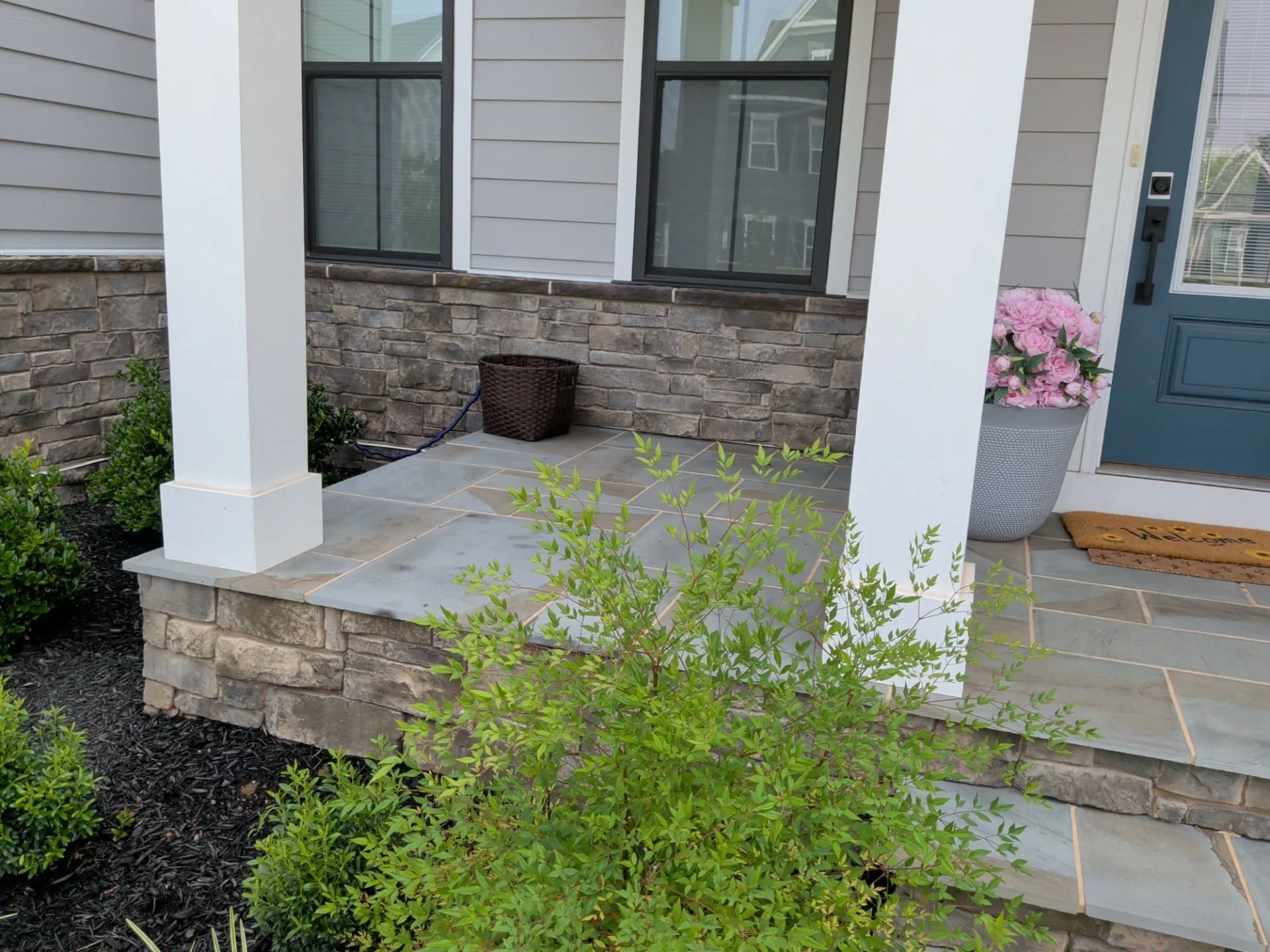
Bluestone front porch steps before vinyl railing installation, Aldie VA
Why homeowners add porch railings
Three reasons come up over and over:
Safety. Front steps get used in the rain, in the dark, in the snow, and by people of every age. A railing gives everyone a handhold. If you have young kids, aging parents, or anyone who's unsteady on their feet, this stops being a nice-to-have.
Code compliance. Virginia's residential code generally requires a guard when a walking surface sits more than 30 inches above the grade below, and a handrail on stairways with four or more risers. Plenty of porches fall just under those thresholds — like this one — which makes railings optional but still smart. If your porch is elevated or your steps are steep, it's worth confirming requirements with Loudoun County before you plan a project, especially if you're preparing to sell.
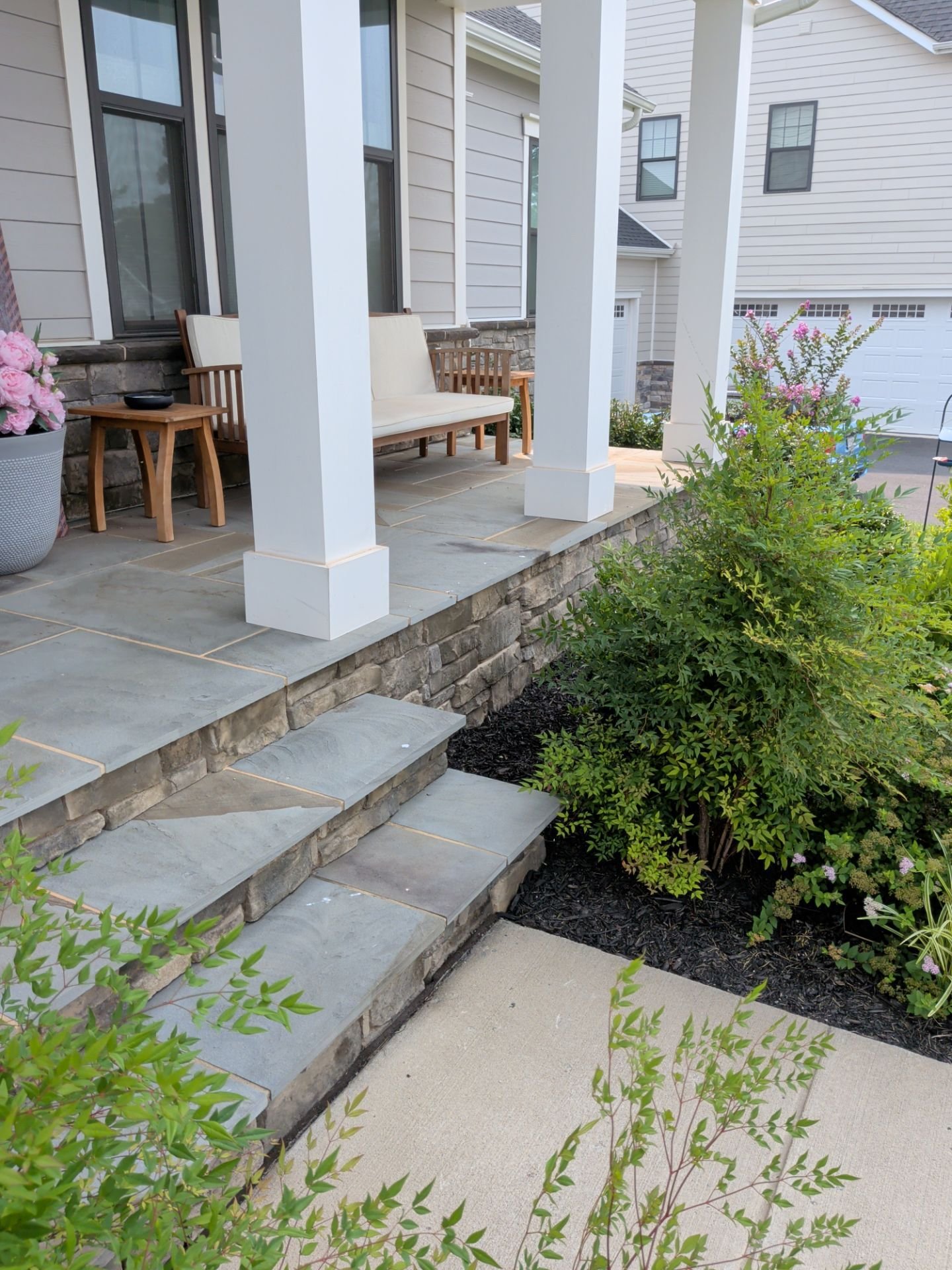
Bluestone treads and stacked stone knee wall on an Aldie VA front porch
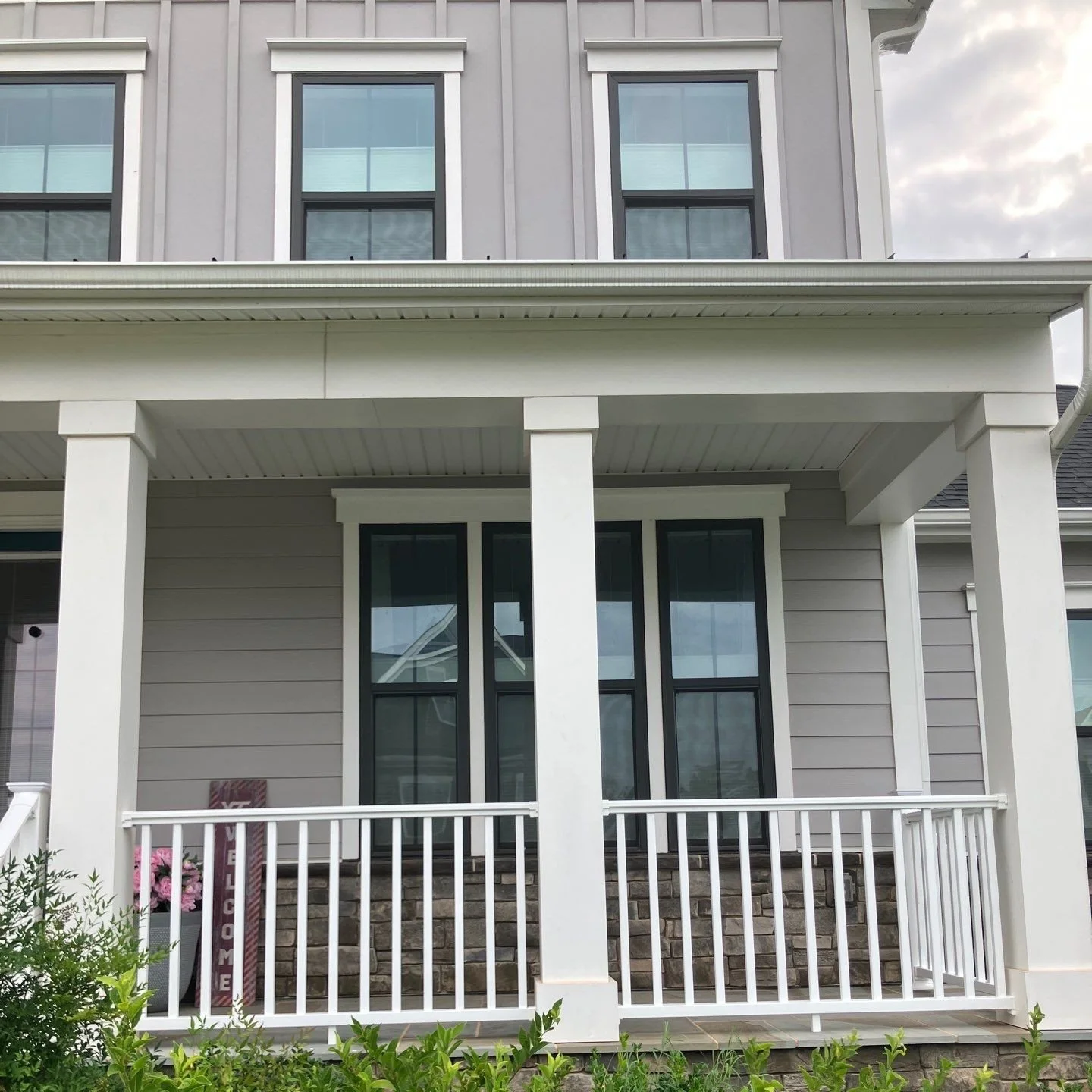
Curb appeal. This is the one people underestimate. Railings give a front entry vertical structure. They frame the door, echo the columns above, and make a facade read as intentional instead of plain. Look at the "after" from the street: the white railings pick up the column wraps and the window trim, and suddenly the whole front of the house is talking to itself.
Why vinyl?
Vinyl isn't the only option — wood, aluminum, and composite all have their place — but for a front entry in Northern Virginia, it's often the practical winner.
Vinyl railing post secured to masonry column on an Aldie VA front porch
No painting, ever. Wood railings on a south-facing porch in our climate need repainting every few years. Vinyl doesn't. You wash it with a hose.
It won't rot, rust, or splinter. Our summers are humid and our winters cycle above and below freezing repeatedly. That freeze-thaw punishment is what destroys wood railings and eats at untreated metal.
Color goes all the way through. Vinyl isn't painted white; it is white. Scuffs don't reveal a different color underneath.
It's fast to install. Vinyl systems come as engineered kits with precision-cut rails, balusters, and post sleeves. Less on-site fabrication means less labor, which means a lower installed cost and a shorter disruption to your household.
It matches trim packages. Most new construction in Loudoun and Fairfax uses white trim and white column wraps. Vinyl railings blend in like they were part of the original build.
The honest tradeoff: vinyl doesn't have the substantial, hand-built feel of a stained wood or wrought iron railing. If you're restoring a historic home in downtown Leesburg, vinyl is probably the wrong call aesthetically. For a modern colonial or craftsman-style home with white trim, it's exactly right.
The tricky part: anchoring into stone and concrete
This is where a railing project goes right or goes wrong.
Fastening a post into wood decking is straightforward. Fastening into a bluestone tread, a concrete stoop, or a stacked stone wall is a different job entirely. You're not driving a screw into something soft and forgiving — you're drilling into stone that can crack, chip, or spall if you approach it wrong.
For this project we used concrete connectors and masonry anchors sized for the load. That means:
Locating each post precisely before drilling. On stone, you get one shot. A misplaced hole is permanent and visible.
Hammer-drilling clean pilot holes at the right diameter and depth for the anchor spec — not eyeballed.
Setting anchors that expand or bond into the substrate so the post resists lateral force, not just downward weight. A railing has to survive somebody's full body weight leaning into it sideways.
Keeping everything plumb and level across an uneven natural stone surface, where no two treads sit at quite the same height.
Sealing penetrations so water doesn't get into the drilled hole, freeze in January, and split the stone.
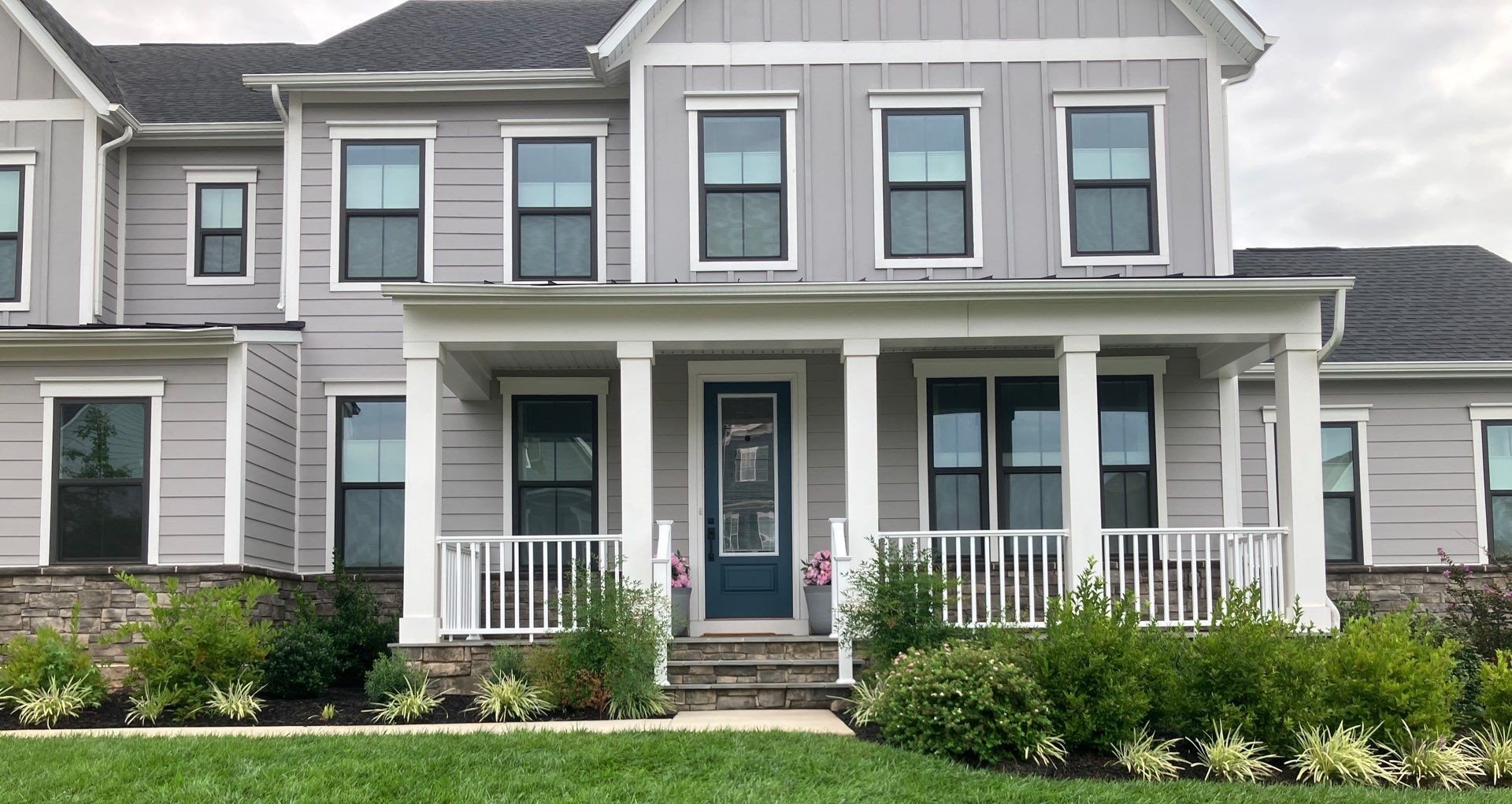
Completed vinyl porch railing installation viewed from the street, Aldie VA home
Done properly, the posts feel like they grew out of the porch. Done poorly, you get wobble within a season and cracked stone that costs far more to fix than the railing did to install.
What the timeline looks like
For a straightforward front-entry railing on an existing porch, most projects run like this:
Site visit and measure — confirming layout, post locations, rail spans, and the substrate we're anchoring into.
Material order — vinyl systems are cut to spec, so lead time depends on the supplier and the profile you choose.
Install day — layout, drilling, anchoring, post sleeves, rail sections, balusters, caps, cleanup.
The install itself is often a single day. That's the appeal: minimal disruption, no weeks of your front entry being a construction zone, no repainting your porch afterward.
Is your porch a good candidate?
Ask yourself:
Do your front steps have anything to hold onto?
Does your porch sit more than a couple feet above grade?
Does the front of your house look flat or unfinished from the street?
Are you planning to list the home in the next year or two?
If you answered yes to any of those, railings are one of the highest-impact, lowest-cost exterior upgrades available. Compared to a deck rebuild or a foundation repair, this is a small project. It just doesn't look small from the curb.
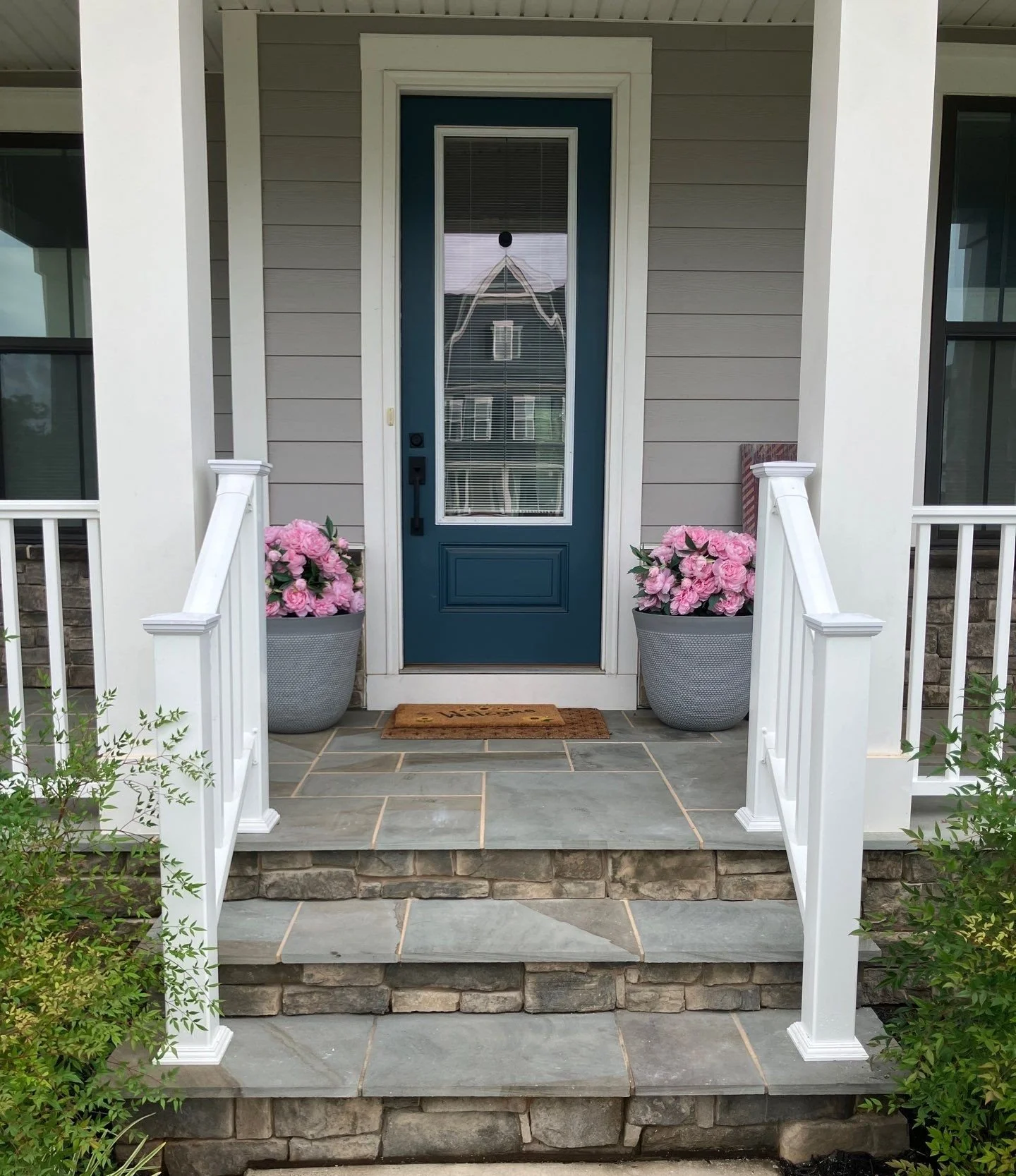
Finished white vinyl railings framing a blue front door entry in Aldie VA
We handle railing projects across Northern Virginia
Contracting Bros installs porch and deck railings throughout Leesburg, Ashburn, Aldie, South Riding, Sterling, and the surrounding Loudoun County area. We handle the masonry anchoring, the layout, and the finish work — and we'll tell you honestly if vinyl is the wrong material for your house.
Have a porch that needs railings? Get in touch for a free estimate.
When Disaster Knocks: Turning a Foundation Repair into a Whole-Home Upgrade
No homeowner wants to hear that their foundation needs major structural work. It's disruptive, it's stressful, and it's rarely in the budget you had planned for the year. But for one Vienna, Virginia family, a serious structural issue became the push they needed to finally tackle the home improvements they'd been putting off for years.
Here's how they turned a tough situation into a smarter, more valuable home — and what other homeowners facing similar repairs can learn from it.
The Situation: Structural Work Opens the Door
The project began when a soil and structure engineering firm was brought in to address significant foundation issues on the property. That kind of work typically means excavation, temporary loss of access to parts of the home, and weeks of construction crews on site.
Rather than treat the disruption as something to simply endure, the homeowners made a practical decision: since the foundation crew was already going to be digging, tearing out, and rebuilding, why not use the momentum to knock out other projects at the same time?
This is a strategy worth remembering if you're ever in a similar spot. Structural repairs often expose or affect adjacent areas of a home — a deck built on a failing foundation wall, a basement with moisture problems tied to the same drainage issues, siding that needs to come off to access a beam. Bundling smaller, related renovations into the same project window can save money on mobilization costs, reduce the number of times your life gets interrupted by construction, and let you finish with a home that's genuinely better than the one you started with — not just repaired.
Rebuilding the Deck: Function First, Style Second
The home's original deck was original wood construction that had simply worn out — the railings were weathered, the lattice skirting was falling apart, and the structure no longer felt as solid as it should. Since the foundation work was already disturbing that side of the house, it made sense to remove the old deck entirely and rebuild it from the ground up.
The rebuild focused on durability first: pressure-treated lumber for the frame, paired with moisture-defying joist tape along every board to protect against the freeze-thaw cycles and humidity that eventually rot untreated wood. That foundation of good building practices is what allows a deck to last decades instead of a single decade.
On top of that solid frame, the family chose low-maintenance gray composite decking, black metal railings, and basket-weave lattice skirting for a clean, modern look. It's a good example of a broader principle: the parts of a deck you can't see — the framing, the fasteners, the moisture protection — matter just as much as the parts you can. A beautiful deck built on shortcuts will fail early; a well-built frame lets you enjoy the finish for years without worry.
From Storage Space to Living Space: The Basement Transformation
The basement told a similar story. Before the renovation, it was unfinished — exposed framing, bare concrete, and boxes stacked wherever there was room. Afterward, it became a genuinely usable part of the home.
The build-out followed a sequence that's worth understanding if you're considering finishing a basement of your own:
Framing – Metal studs were used throughout, which resist moisture and pests far better than wood framing in a below-grade space.
Insulation – High-performance insulation was installed to keep the space comfortable year-round and to help control humidity, which is one of the most common long-term problems in finished basements.
Drywall – Moisture-resistant green board was used for the walls, an important detail in any basement application where dampness is a possibility even after waterproofing work.
Flooring – Light-colored hardwood flooring finished the space, immediately making it feel brighter and more like an extension of the main living areas rather than an afterthought.
The result is a basement that adds real, usable square footage to the home — a space that can serve as a family room, home office, guest area, or whatever the family needs next, rather than a place where boxes go to be forgotten.
Lessons for Homeowners Facing Structural Repairs
If you're staring down a major foundation or structural repair, a few takeaways from this project can help you make the most of a difficult situation:
Ask what else the repair will disturb. Excavation, temporary removals, and access needs often overlap with other renovation opportunities. It's worth a conversation with your contractor before work begins.
Don't rebuild like-for-like out of habit. If a deck, wall, or basement has to come apart anyway, it's a natural moment to upgrade materials, layout, or finishes rather than simply replacing what was there.
Invest in what you can't see. Moisture barriers, proper framing materials, and quality insulation don't show up in "after" photos, but they're the reason a renovation lasts. Prioritize these before spending on finishes.
Think in terms of added value, not just repair. A structural repair is a cost. A finished basement or a rebuilt deck is an investment that adds livable space and resale value. Combining the two turns a hard year into a smart one.
A major repair is never fun to go through. But with the right planning, it doesn't have to be wasted disruption — it can be the starting point for the home upgrade you've been meaning to get to all along.
Why a Thorough Home Inspection Matters: A Hidden Drain Leak in Vienna, VA
Some of the most expensive problems in a home are the ones you can't see. Behind a perfectly painted ceiling or a freshly finished wall, water can be doing damage for months — sometimes years — before anyone notices. A recent job in Vienna, VA is a good example of exactly why a thorough home inspection matters before you settle on a purchase.
What We Found
The homeowner had noticed a small sign of trouble, enough to call us in and take a closer look. Once we opened up the ceiling and wall to investigate, the real scope of the problem became clear.
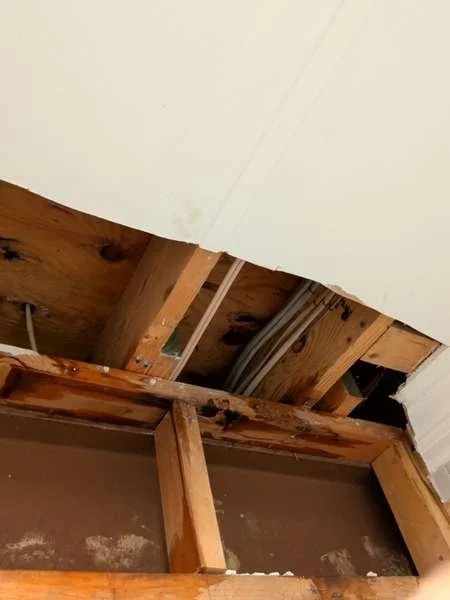
The ceiling opened up to reveal months of hidden water damage.
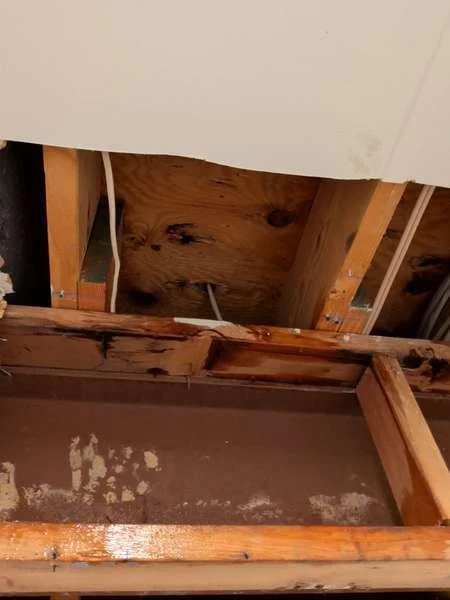
A closer look at the stained framing
The framing above told the story right away — long-term water staining across multiple joists, the telltale sign of a slow, ongoing leak rather than a single incident.
Tracing the Source
Once the ceiling was opened further, we were able to trace the water damage back to its source: a leak in the drain line running through a wall cavity.
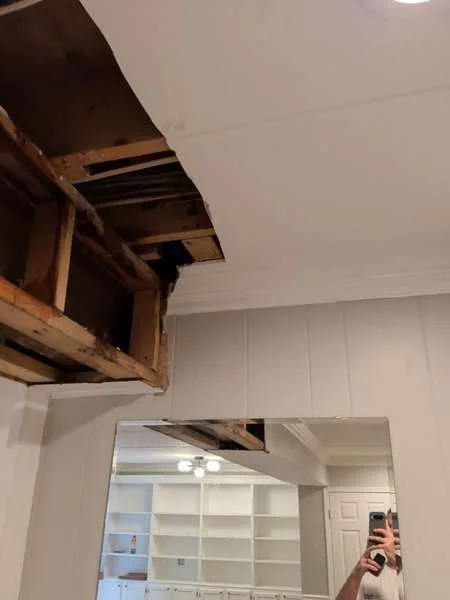
Tracing the leak back to the drain line.
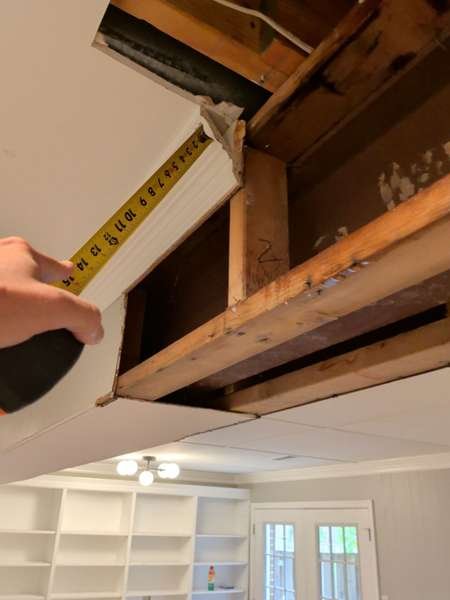
Measuring the full extent of the damaged area.
A drain line leak is a particularly sneaky problem. Unlike a burst supply line, which announces itself immediately with a flood, a drain leak can weep slowly for a long time — soaking into wood framing, insulation, and drywall little by little, often without any obvious sign at the surface.
The Wall Told the Same Story
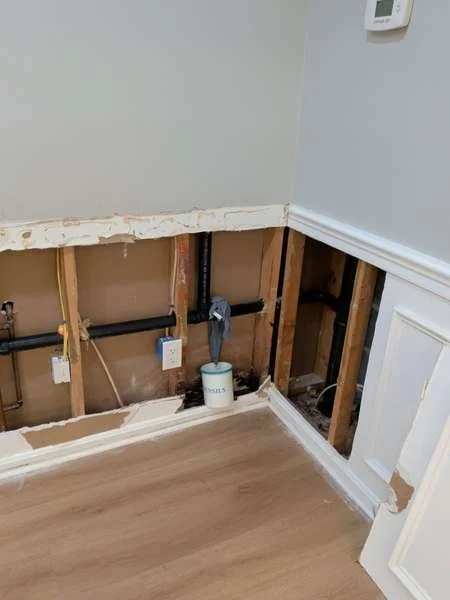
Opening the wall below confirmed what the ceiling had already shown us. The drywall and baseboard had to come out to expose the full run of plumbing and check for mold growth along the way.
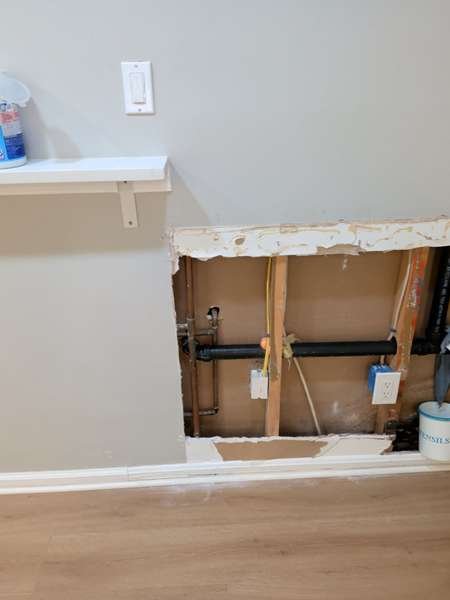
The wall told the same story once opened.
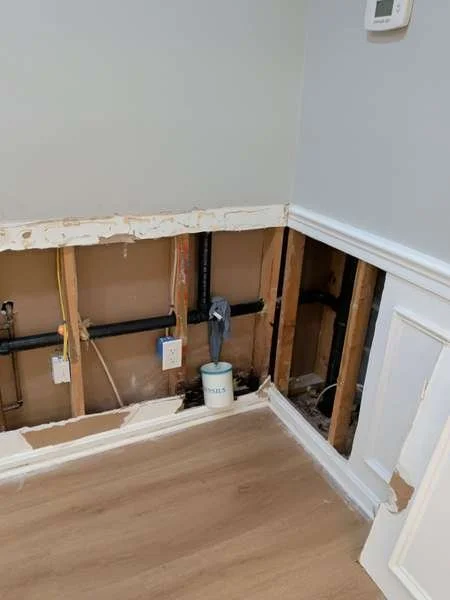
A wider view of the plumbing run behind the wall.
Where moisture sits against wood and drywall for extended periods, mold isn't a possibility — it's an expectation. That's exactly what we found here, which is why the affected materials all need to come out rather than just be patched over.
Why This Matters Before You Buy
This is the kind of damage a routine walkthrough will almost never catch. Ceilings and walls hide plumbing runs by design, and a slow drain leak doesn't always leave a visible stain, especially if it's been recently painted over. A qualified home inspector — and ideally a plumber's camera inspection on older drain lines — is often the only way to catch a problem like this before it becomes the buyer's responsibility.
Left unresolved, a hidden leak like this one keeps causing damage the whole time it goes unnoticed:
Structural wood decay
The longer framing stays wet, the more it weakens, eventually requiring replacement rather than repair.
Mold growth
Once moisture sits against wood and drywall, mold can spread through wall and ceiling cavities, well beyond what's visible at the surface.
Rising repair costs
A leak caught early might mean a small patch. Caught late, it can mean opening up ceilings, walls, and flooring to fully remove and rebuild the damaged area.
Air quality concerns
Mold growth inside wall and ceiling cavities can affect indoor air quality long before it's visible to the people living in the home.
What This Repair Involves
Now that the ceiling and wall are open and the source has been identified, the next steps are to fully remove any affected framing, drywall, and insulation, repair the drain line itself, and rebuild the ceiling and wall to match the home's original condition. Based on the scope of what we've uncovered so far, we expect the total cost to restore this space to its pre-incident condition to land around $5,000-$6,500 — a range that would have been far smaller had the leak been caught at an earlier stage.
The Takeaway for Homeowners and Buyers
If you're buying a home, don't skip a full inspection — and don't hesitate to ask specifically about plumbing, especially drain lines running through ceilings and walls, which are notoriously easy to overlook. If you already own your home, keep an eye out for subtle signs: a faint musty smell, slight discoloration on a ceiling, or a soft spot underfoot. Catching a leak early is almost always the difference between a manageable repair and a much larger one.
We'll be following up as work on this project continues — check back for updates as we finish restoring this space.
If you're dealing with a suspected leak, water damage, or mold issue in your home, [contact us](https://www.contractingbros.com/contact-us) for an assessment.

Why Home Maintenance Can't Wait: Lessons from a Lansdowne, VA Repaint
There's something uniquely satisfying about a project that leaves a home better than we found it. Those are the jobs that stick with us — and they're also the ones that teach us the most about why regular home maintenance matters more than most homeowners realize.
We often partner with realtors to get homes market-ready, and those projects tend to reveal the same pattern: small maintenance items that got put off for "someday" eventually pile up into one big, urgent job. A home in Lansdowne, VA taught us that lesson clearly.
The Job: A 4,000 Square Foot Repaint, Wall to Wall
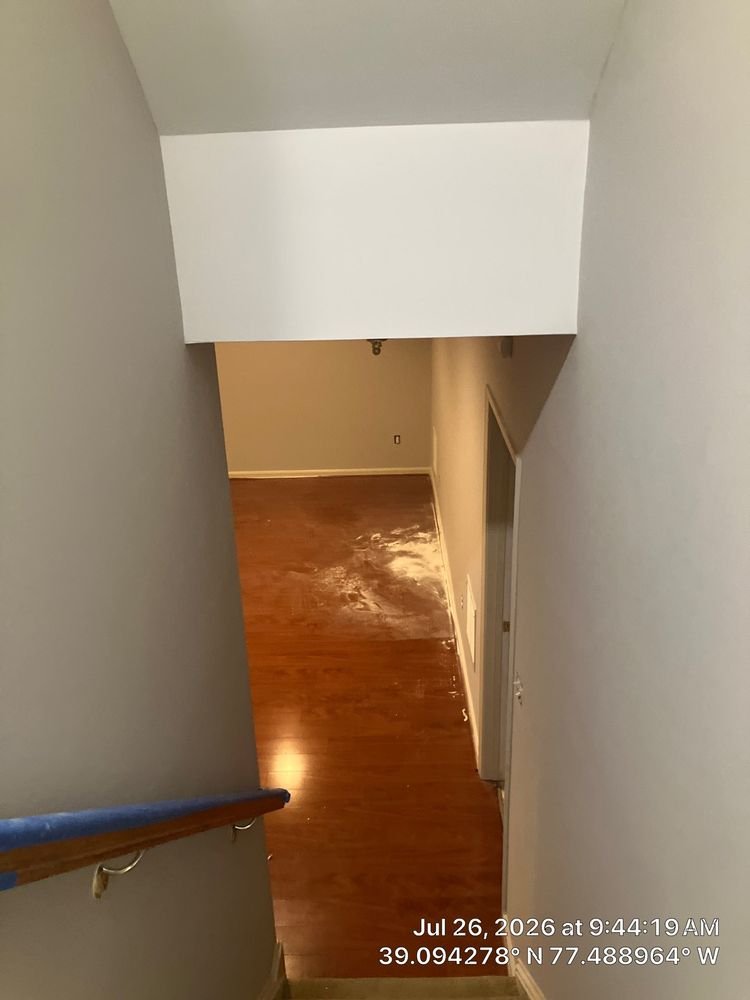
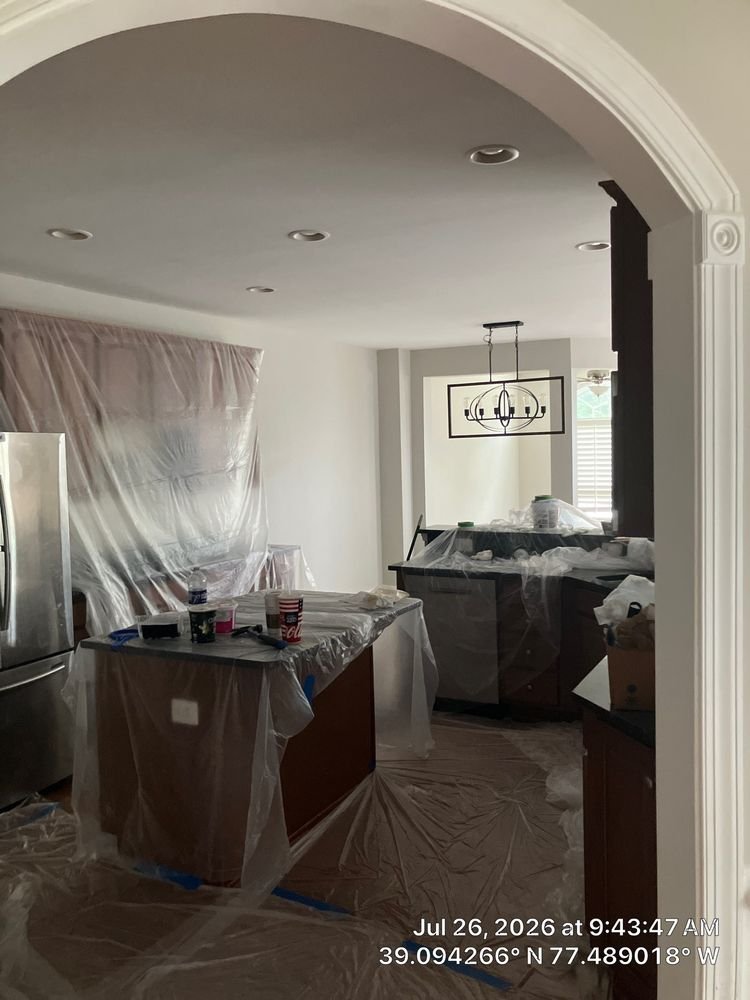
As soon as the sellers moved out, we moved in. Walking through the property, it was clear we had a serious job ahead of us — nearly every surface across all 4,000 square feet needed fresh paint before the home could go on the market.
We started the way we always do: prepping the entire space properly. That meant laying down cloth and plastic floor coverings throughout, taping off trim, windows, and fixtures, and staging our paint and supplies room by room. Good prep isn't the exciting part of the job, but it's what protects a home and makes the finished work look clean.
From there, our teams got to work "cutting" — running a brush carefully along every ceiling edge and corner — before rolling the larger ceiling surfaces. We moved floor by floor, working efficiently as a team to keep the project on schedule.
Why Timing Matters So Much for Sellers
In real estate, time is money — literally. The longer a home sits on the market before listing, the more it can cost the seller in carrying costs, price reductions, and lost momentum. For this project, our timeline was five days. Not five business days — five calendar days, start to finish, with no room for delay.
That kind of deadline is common when we work with realtors, and it's a good reminder for any homeowner: cosmetic wear and tear doesn't take five days to fix once it's piled up across an entire house. It takes far longer — and costs more — the longer it's ignored.
The Bigger Lesson for Homeowners
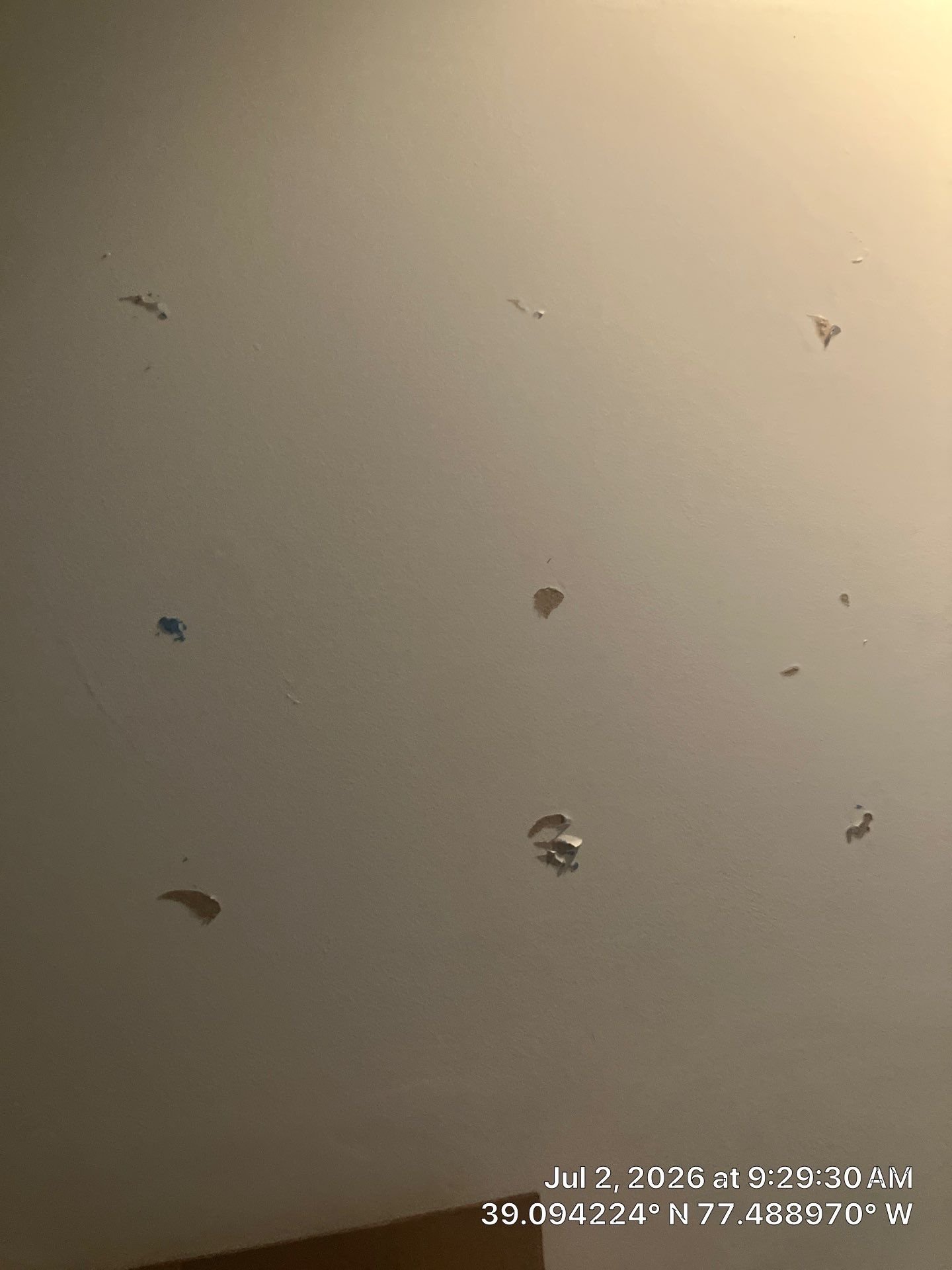
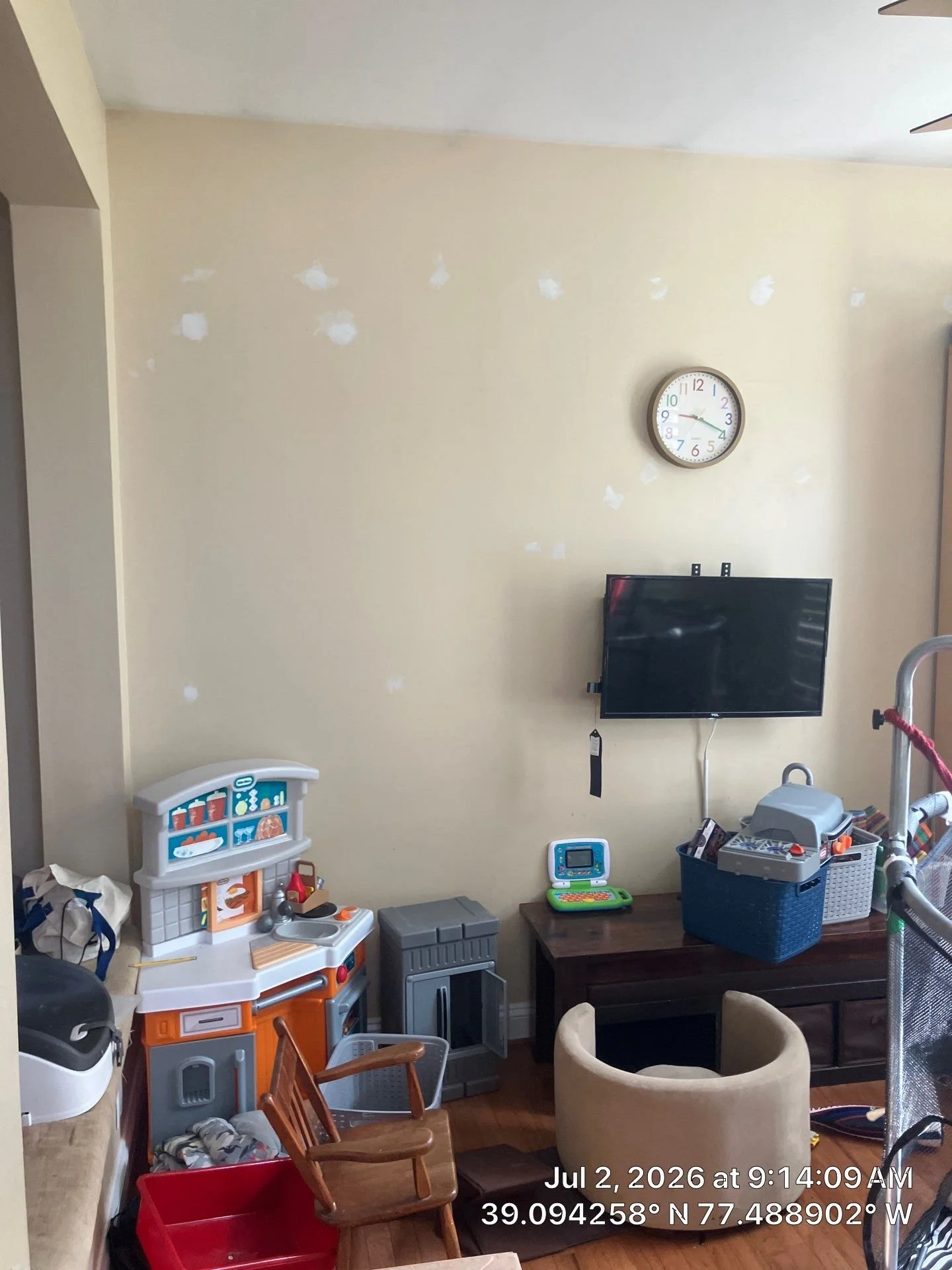
Most of the surfaces we painted in that Lansdowne home weren't in terrible shape individually. Scuffed walls, a few years of scaling, wear points near doors and switches — the kind of small, everyday marks every home collects over time. Individually, none of it seemed urgent. Together, it added up to a whole-house job under real time pressure.
That's the pattern we see again and again: homeowners who tackle small maintenance items as they appear — a scuff here, a touch-up there — rarely face a five-day, top-to-bottom crunch later on. Regular upkeep doesn't just keep a home looking good; it protects you from having to do everything at once, under pressure, whether you're preparing to sell or simply want your home to age well.
A few simple habits go a long way:
Touch up small paint wear as it happens, rather than letting it accumulate room by room.
Walk your home seasonally and note anything that's started to show wear — trim, walls, ceilings, fixtures.
Address issues before they multiply. One worn wall is a quick fix. A whole house of worn walls is a five-day sprint.
The Takeaway
An uplifting project like this one always leaves us wanting more — there's nothing quite like handing a homeowner (or a realtor) a freshly finished space, ready for its next chapter. But it's also a great reminder that the best home maintenance is the kind that happens gradually, not all at once under a deadline.
If your home could use some attention — big or small — before it starts to add up, Contracting Bros is here to help. Contact us to talk through what your home might need.