
Vinyl Porch Railings in Aldie, VA: A One-Day Upgrade That Adds Safety and Serious Curb Appeal
Some projects take weeks. This one took a day. A front porch in Aldie went from unfinished to framed with vinyl railings anchored into bluestone and concrete — here's how that anchoring actually works, and why vinyl holds up in Northern Virginia weather.
Some projects take weeks. This one took a day — and it changed the entire face of the house.
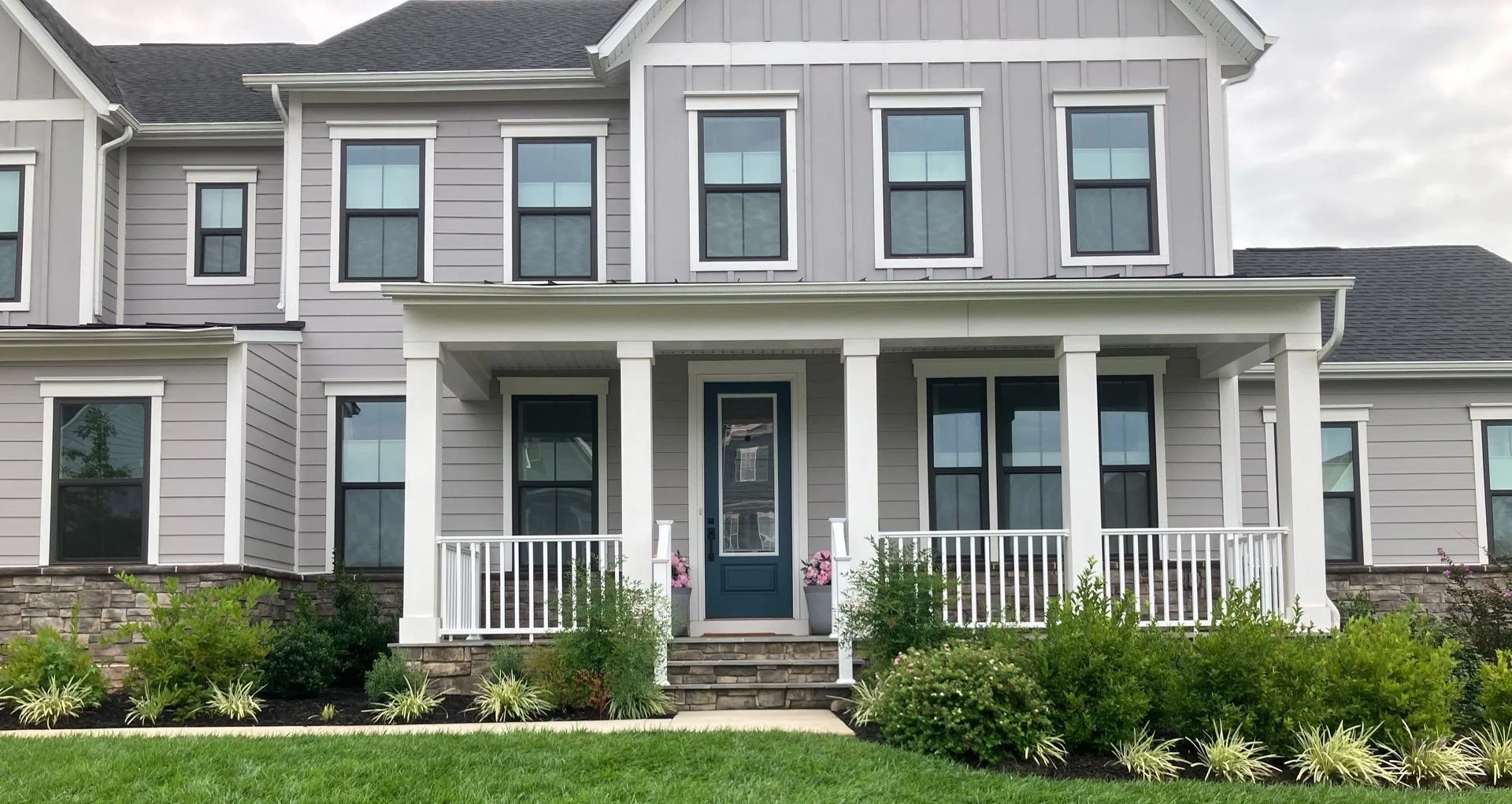
A homeowner in Aldie reached out about their front porch. The stonework was beautiful: bluestone treads, a stacked stone knee wall, clean white columns, a deep blue front door. But the entry had no railing. Guests coming up the steps had nothing to hold onto, and visually, the porch felt unfinished — like a picture frame with one side missing.
The fix was vinyl railings, anchored into masonry with concrete connectors. We were in and out in a single visit, and the difference from the curb is hard to overstate.
Here's how a project like this actually works, and what to think about if you're considering railings for your own porch or stoop.
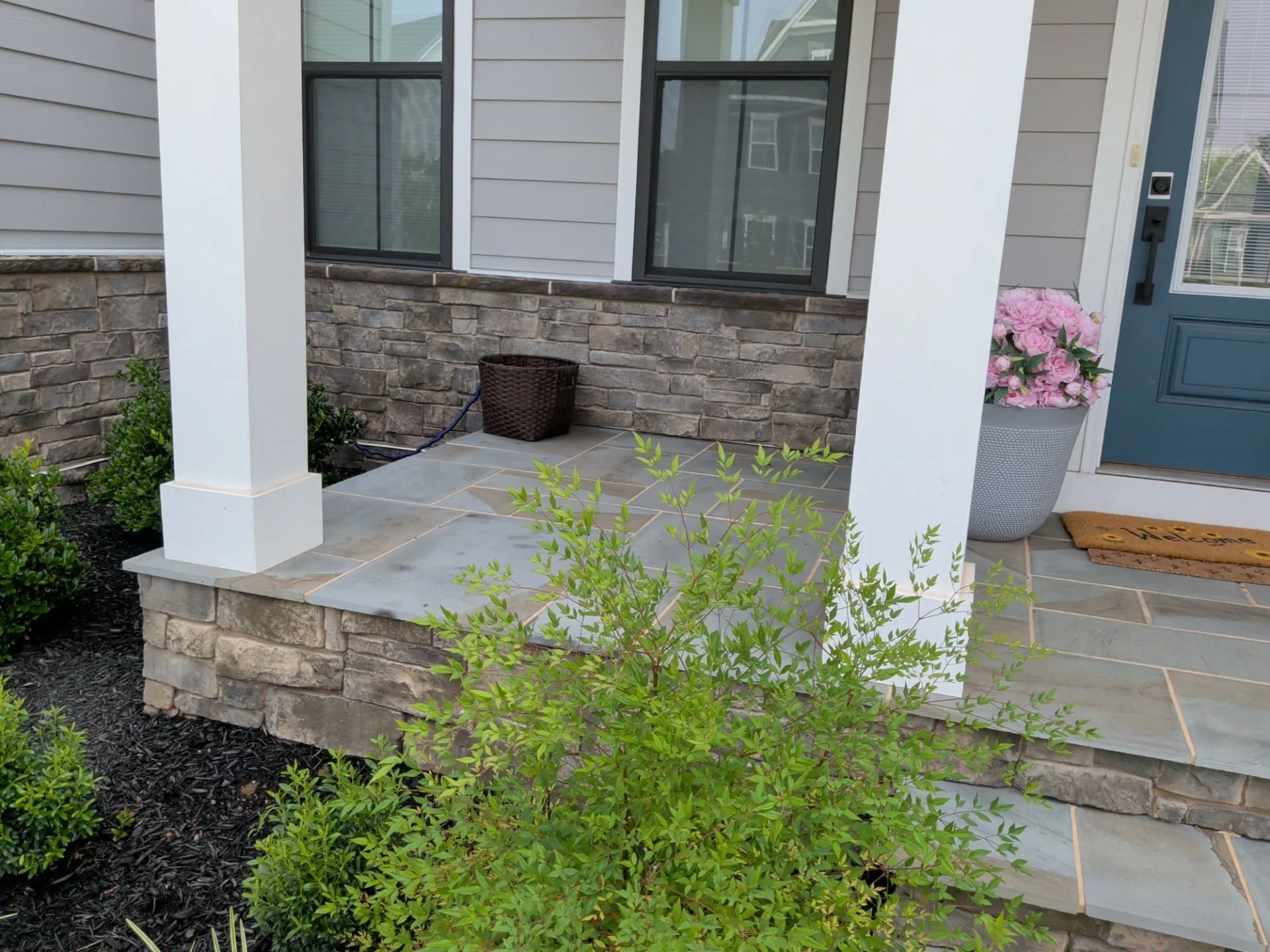
Bluestone front porch steps before vinyl railing installation, Aldie VA
Why homeowners add porch railings
Three reasons come up over and over:
Safety. Front steps get used in the rain, in the dark, in the snow, and by people of every age. A railing gives everyone a handhold. If you have young kids, aging parents, or anyone who's unsteady on their feet, this stops being a nice-to-have.
Code compliance. Virginia's residential code generally requires a guard when a walking surface sits more than 30 inches above the grade below, and a handrail on stairways with four or more risers. Plenty of porches fall just under those thresholds — like this one — which makes railings optional but still smart. If your porch is elevated or your steps are steep, it's worth confirming requirements with Loudoun County before you plan a project, especially if you're preparing to sell.
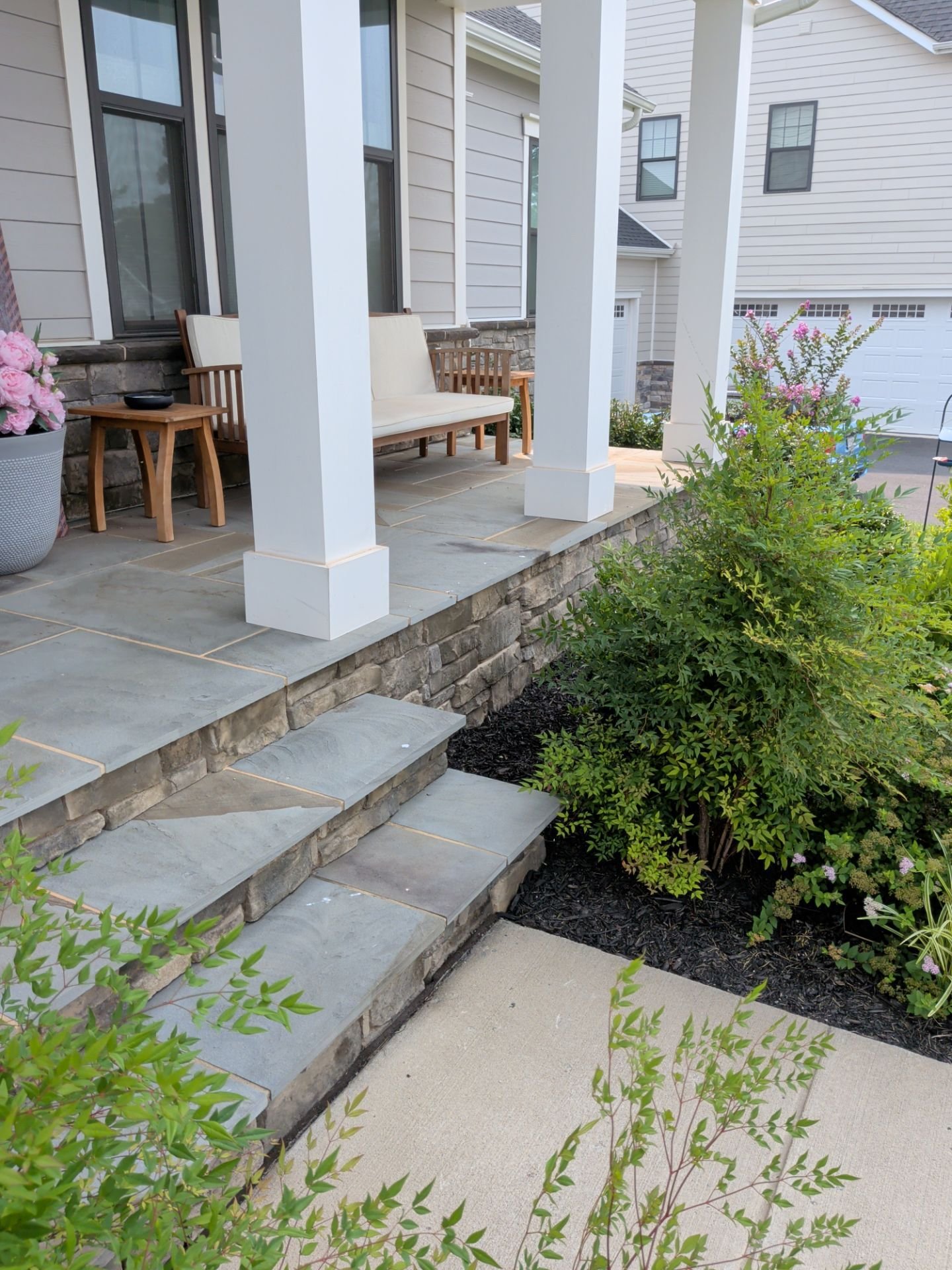
Bluestone treads and stacked stone knee wall on an Aldie VA front porch
Curb appeal. This is the one people underestimate. Railings give a front entry vertical structure. They frame the door, echo the columns above, and make a facade read as intentional instead of plain. Look at the "after" from the street: the white railings pick up the column wraps and the window trim, and suddenly the whole front of the house is talking to itself.
Why vinyl?
Vinyl isn't the only option — wood, aluminum, and composite all have their place — but for a front entry in Northern Virginia, it's often the practical winner.
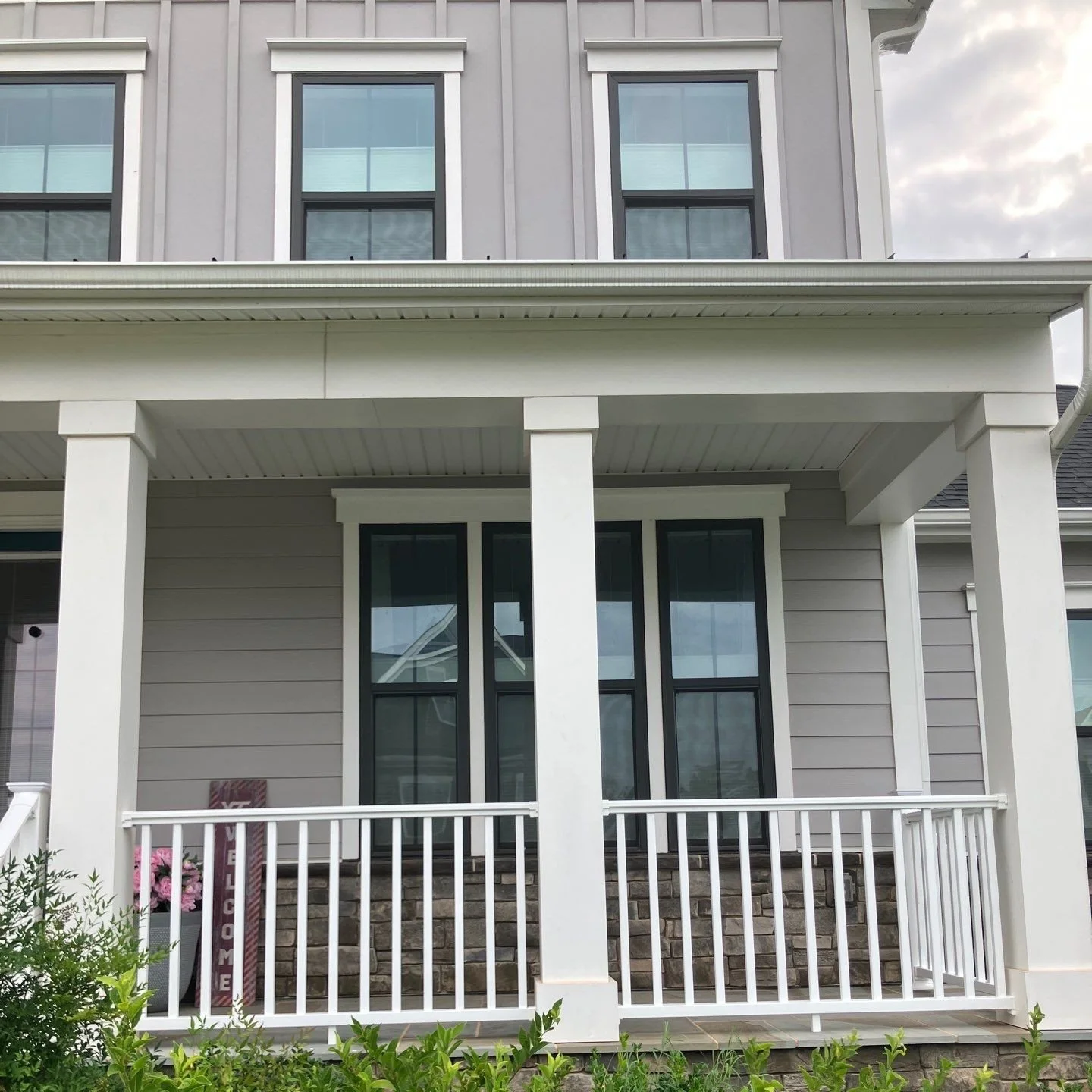
Vinyl railing post secured to masonry column on an Aldie VA front porch
No painting, ever. Wood railings on a south-facing porch in our climate need repainting every few years. Vinyl doesn't. You wash it with a hose.
It won't rot, rust, or splinter. Our summers are humid and our winters cycle above and below freezing repeatedly. That freeze-thaw punishment is what destroys wood railings and eats at untreated metal.
Color goes all the way through. Vinyl isn't painted white; it is white. Scuffs don't reveal a different color underneath.
It's fast to install. Vinyl systems come as engineered kits with precision-cut rails, balusters, and post sleeves. Less on-site fabrication means less labor, which means a lower installed cost and a shorter disruption to your household.
It matches trim packages. Most new construction in Loudoun and Fairfax uses white trim and white column wraps. Vinyl railings blend in like they were part of the original build.
The honest tradeoff: vinyl doesn't have the substantial, hand-built feel of a stained wood or wrought iron railing. If you're restoring a historic home in downtown Leesburg, vinyl is probably the wrong call aesthetically. For a modern colonial or craftsman-style home with white trim, it's exactly right.
The tricky part: anchoring into stone and concrete
This is where a railing project goes right or goes wrong.
Fastening a post into wood decking is straightforward. Fastening into a bluestone tread, a concrete stoop, or a stacked stone wall is a different job entirely. You're not driving a screw into something soft and forgiving — you're drilling into stone that can crack, chip, or spall if you approach it wrong.
For this project we used concrete connectors and masonry anchors sized for the load. That means:
Locating each post precisely before drilling. On stone, you get one shot. A misplaced hole is permanent and visible.
Hammer-drilling clean pilot holes at the right diameter and depth for the anchor spec — not eyeballed.
Setting anchors that expand or bond into the substrate so the post resists lateral force, not just downward weight. A railing has to survive somebody's full body weight leaning into it sideways.
Keeping everything plumb and level across an uneven natural stone surface, where no two treads sit at quite the same height.
Sealing penetrations so water doesn't get into the drilled hole, freeze in January, and split the stone.
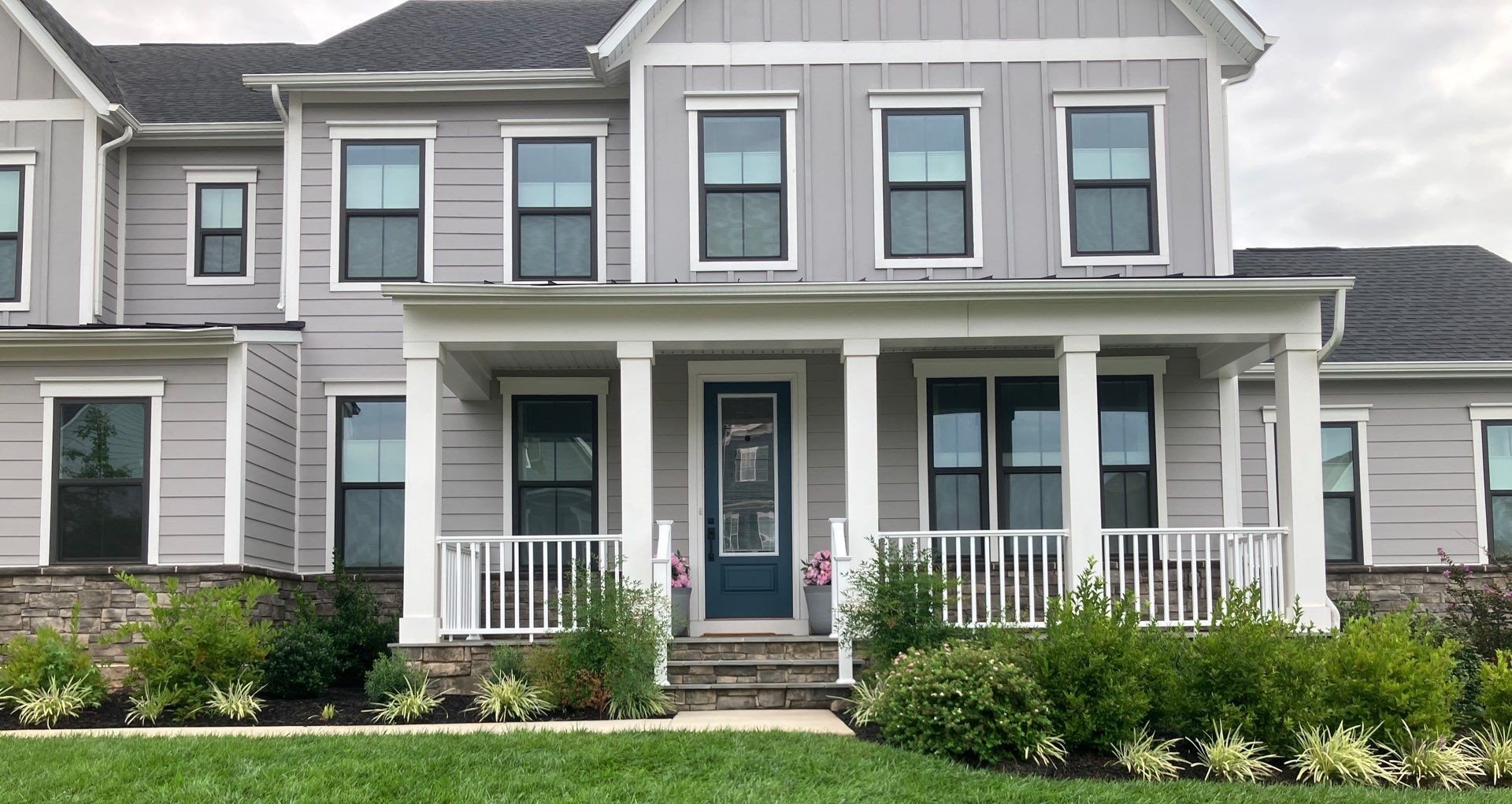
Completed vinyl porch railing installation viewed from the street, Aldie VA home
Done properly, the posts feel like they grew out of the porch. Done poorly, you get wobble within a season and cracked stone that costs far more to fix than the railing did to install.
What the timeline looks like
For a straightforward front-entry railing on an existing porch, most projects run like this:
Site visit and measure — confirming layout, post locations, rail spans, and the substrate we're anchoring into.
Material order — vinyl systems are cut to spec, so lead time depends on the supplier and the profile you choose.
Install day — layout, drilling, anchoring, post sleeves, rail sections, balusters, caps, cleanup.
The install itself is often a single day. That's the appeal: minimal disruption, no weeks of your front entry being a construction zone, no repainting your porch afterward.
Is your porch a good candidate?
Ask yourself:
Do your front steps have anything to hold onto?
Does your porch sit more than a couple feet above grade?
Does the front of your house look flat or unfinished from the street?
Are you planning to list the home in the next year or two?
If you answered yes to any of those, railings are one of the highest-impact, lowest-cost exterior upgrades available. Compared to a deck rebuild or a foundation repair, this is a small project. It just doesn't look small from the curb.
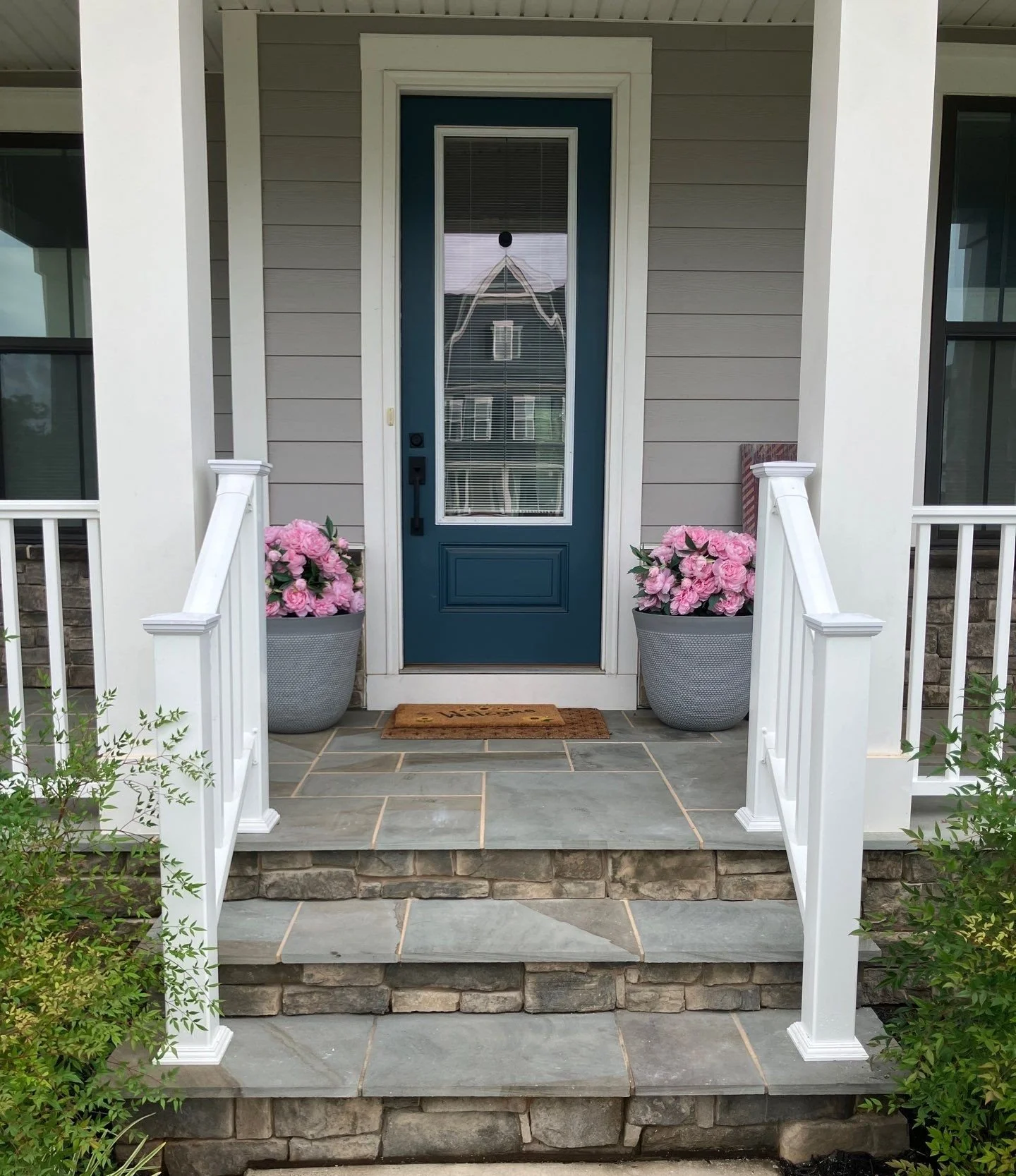
Finished white vinyl railings framing a blue front door entry in Aldie VA
We handle railing projects across Northern Virginia
Contracting Bros installs porch and deck railings throughout Leesburg, Ashburn, Aldie, South Riding, Sterling, and the surrounding Loudoun County area. We handle the masonry anchoring, the layout, and the finish work — and we'll tell you honestly if vinyl is the wrong material for your house.
Have a porch that needs railings? Get in touch for a free estimate.